
Collection: Solitaire Lab Grown Diamond Rings


-
Titan Crest Diamond Men's Ring
Regular price From Rs. 24,300.00Regular priceUnit price perRs. 28,600.00Sale price From Rs. 24,300.00Sale -
Bold Two-Tone Solitaire Diamond Ring
Regular price From Rs. 30,200.00Regular priceUnit price perRs. 35,550.00Sale price From Rs. 30,200.00Sale -
Round-Cut Diamond Solitaire Ring
Regular price From Rs. 32,400.00Regular priceUnit price perRs. 38,100.00Sale price From Rs. 32,400.00Sale -
Sleek Solitaire Diamond Ring
Regular price From Rs. 34,100.00Regular priceUnit price perRs. 40,100.00Sale price From Rs. 34,100.00Sale -
Classic Two-Tone Diamond Ring
Regular price From Rs. 28,550.00Regular priceUnit price perRs. 33,550.00Sale price From Rs. 28,550.00Sale -
Solitaire Diamond Ring
Regular price From Rs. 31,400.00Regular priceUnit price perRs. 36,950.00Sale price From Rs. 31,400.00Sale


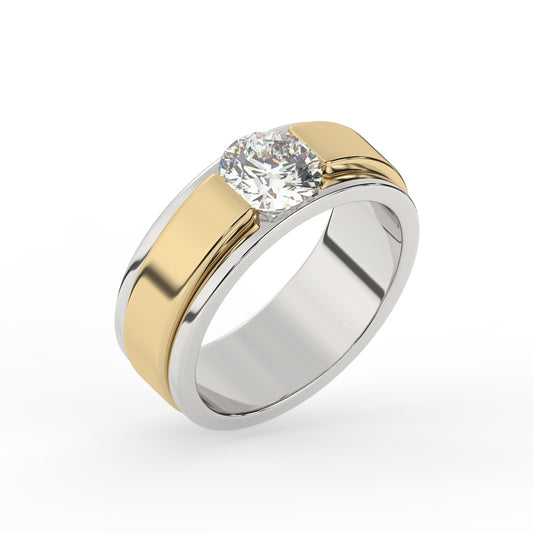


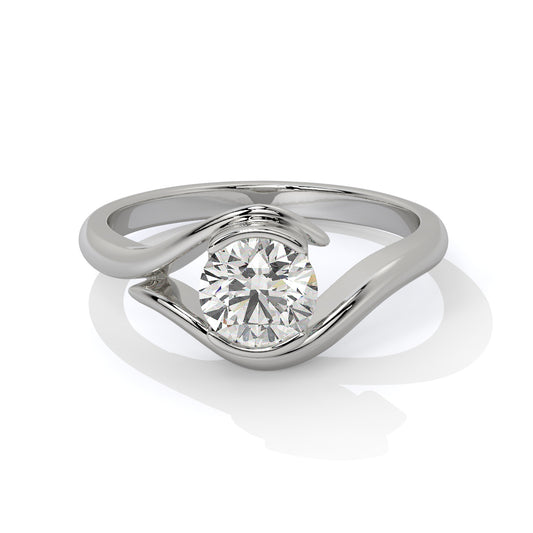


The Icon of Purity: The Solitaire Diamond Ring Collection
The Solitaire Lab Grown Diamond Rings is the definitive icon of commitment, an enduring symbol of love's singular focus and purity. Aire’s collection of lab grown diamond solitaire ring designs celebrates this timeless elegance, showcasing the centre diamond in a setting engineered to maximise its fire, brilliance, and overall size. By stripping away all distraction, the solitaire places the entire emphasis on the perfection of the stone—its cut, clarity, and exceptional colour. Choosing a solitaire buy solitaire diamond ring india from Aire is choosing uncompromising quality and clarity. Our diamonds are meticulously cut to 'Ideal' or 'Excellent' proportions, ensuring optimal light return. The result is a piece of jewellery where brilliance is paramount, set in a band of high-fineness Platinum or 18K gold. This collection represents the definitive selection for those who value classic sophistication and the profound, unadorned beauty of the best lab created diamond solitaire ring available.
The Art of Focus: Setting Engineering for Maximum Brilliance
The success of a buy solitaire ring india lies in the technical brilliance of its setting, which must secure the stone while ensuring maximum exposure to light.
-
Elevated Setting: The primary purpose of the setting (typically a four or six-prong design) is to elevate the diamond high above the band. This strategic elevation allows light to enter the stone's pavilion (the underside) from all angles, dramatically increasing its brilliance and fire.
-
Minimalist Prongs: Our prongs are crafted to be as thin and minimal as possible, yet structurally robust. This reduces metal obstruction on the diamond’s surface, allowing more light to enter and making the lab created diamond solitaire ring appear larger and brighter.
-
Diamond Matching Protocol: In solitaire designs, the centre stone is the entire focus. We ensure all our diamonds selected for a solitaire lab diamond design possess a superior Cut grade—the single most important factor for brilliance—alongside high Colour (D-F range) and Clarity (VS+ range).
-
Metal Choice and Reflection: The choice of metal—Platinum or White Gold—is often preferred for solitaire settings as its cool, white reflection enhances the diamond’s colourless appearance, making the stone look sharper and maximising its white light return.
Design Variations: Personalising the Classic
While the concept is singular, the lab grown diamond solitaire ring offers subtle, impactful variations based on personal style and preference.
-
Prong Count: A six-prong setting is considered the most secure option, offering a classic, rounded aesthetic. A four-prong setting exposes more of the diamond's surface, particularly effective for square or rectangular cuts, often lending a more contemporary, minimalist feel.
-
Band Profile: The band (shank) can be customised. Options include the sleek, high-polished traditional band, the refined Knife-Edge band (which creates a visually sharper, thinner profile), or the Comfort-Fit band (which features a rounded interior for superior daily comfort).
-
Basket/Peghead Setting: Solitaire rings utilise either a basket setting (where the prongs are supported by a metal cup at the base) or a peghead setting (where the setting is mounted on a peg inserted into the band). The peghead setting allows for the highest possible elevation and maximum light exposure.
-
Diamond Shape: Beyond the classic Round Brilliant, the solitaire style beautifully showcases other shapes—the elegant elongated Oval, the geometric Princess, or the sophisticated Cushion—each shape offering a unique aesthetic, making the solitaire lab diamond truly personal.
Styling and Symbolism: Unadorned Elegance
The simplicity of the solitaire solitaire ring online india makes it the most versatile and timeless piece of commitment jewellery.
-
Effortless Pairing: The clean lines of the solitaire setting mean it pairs flawlessly with any wedding band, whether a simple, high-polished band, a delicate pave band, or a complex eternity ring. There is no need for contoured bands, ensuring a flush, comfortable stack.
-
Focus on the Hand: The solitaire is a statement in itself. Styling should be minimal, allowing the diamond's brilliance to be the primary focal point of the hand.
-
Symbolic Power: The solitary nature of the diamond is deeply symbolic, representing one love, one life, and the singular focus of the commitment—a powerful narrative for the lab created diamond solitaire ring.
Heirloom Quality and Care: Securing the Solitaire
Maintaining the enduring quality and security of the centre diamond is the sole focus of care for a solitaire ring.
-
Critical Cleaning: The diamond's brilliance relies entirely on light passing through the stone. Grime, lotions, and oils underneath the setting can drastically diminish the sparkle. Clean the ring frequently—at least weekly—using a soft brush and mild soapy water, focusing intently on the area underneath the diamond.
-
Mandatory Prong Check: The security of a solitaire diamond rests entirely on the four or six prongs. We recommend a non-negotiable professional inspection every six months. Your jeweller will check the tension and integrity of the metal, tightening any prongs that may have become loose through daily wear and impact.
-
Storage: Store the solitaire lab grown diamond ring separately from other rings. Its exposed diamond girdle and prongs can scratch other jewellery pieces, particularly softer gemstones or metal surfaces.
FAQs
-
What is the single best factor to look for in a lab grown diamond solitaire ring? Cut quality. A diamond with an Excellent or Ideal cut will look infinitely more brilliant and often appear larger than a diamond of a higher carat weight but a poor cut grade.
-
Does the size of the solitaire diamond affect the thickness of the band? Yes, structurally. A very large centre stone requires a band of sufficient thickness and height to support the weight and maintain the setting's stability. However, the band can be visually tapered near the setting to enhance the diamond's size.
-
Is a six-prong setting or a four-prong setting best for a lab created diamond solitaire ring? A six-prong setting offers superior security. A four-prong setting exposes more of the diamond, maximising its visible surface area. Both are durable when crafted in high-quality metals, but the six-prong offers better peace of mind.
-
Can a solitaire lab diamond be re-set later into a more complex design? Absolutely. One of the main benefits of a high-quality solitaire diamond is its versatility. The stone can be easily removed and re-set into a halo or sidestone design years later, offering a renewed look without needing a new diamond.
-
What is the best metal colour for enhancing a high-white solitaire diamond? Platinum or White Gold. These metals reflect a cool white light that complements and enhances the diamond’s high-white Colour (D-F range), ensuring the stone appears as bright and colourless as possible.
