
Collection: Sidestone (Engagement Ring)


-
Cushion-Cut Three-Stone Ring
Regular price From Rs. 59,150.00Regular priceUnit price perRs. 69,600.00Sale price From Rs. 59,150.00Sale -
Elegant Diamond Ring Collection
Regular price From Rs. 61,350.00Regular priceUnit price perRs. 72,150.00Sale price From Rs. 61,350.00Sale

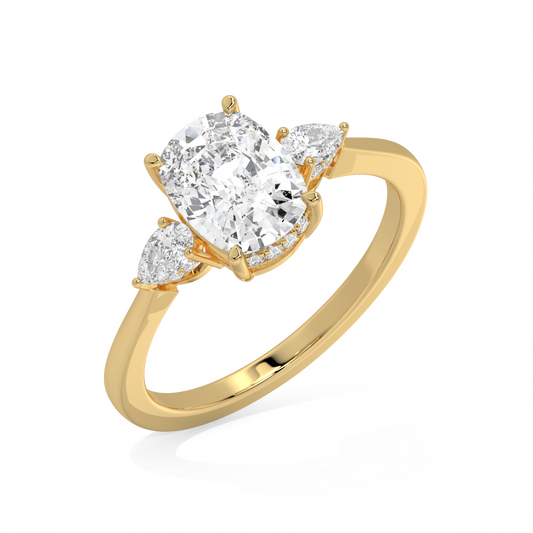

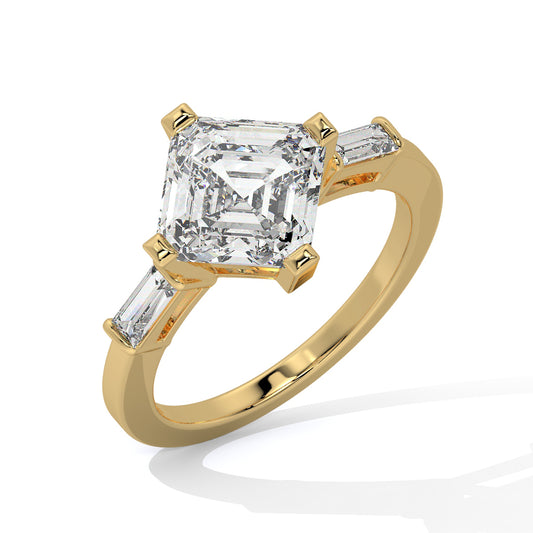
The Accentuated Centrepiece: The Sidestone Ring Collection
The sidestone engagement ring is a popular evolution of the classic solitaire, where the centre diamond is dramatically enhanced by smaller diamonds set into the shoulders of the band. Aire's collection of lab grown diamond sidestone ring designs offers amplified brilliance, creating a visual flow of light that magnifies the perceived size and sparkle of the central stone. The addition of meticulously matched accent diamonds—often round brilliant or baguette cuts—transforms the ring into a breathtaking piece of comprehensive luxury. Choosing a sidestone lab grown diamond ring provides the visual impact of a larger ring while maintaining the elegance of a dedicated centre focus. Our accent stones are selected with the same stringent criteria as the main diamond, ensuring exceptional Colour and Clarity across the entire ring. This collection offers the best lab created diamond sidestone ring selection for those seeking maximum brilliance and a design that symbolises an enhanced, continuous commitment.
Design Mechanics: Amplifying Centre Diamond Performance
The design of a lab grown sidestone diamond ring is an exercise in visual synergy, ensuring the accent stones complement, rather than detract from, the centrepiece.
-
Tapered Shoulders: The band often tapers subtly as it approaches the centre setting. This design feature draws the eye inward, making the main diamond appear larger and enhancing the delicate transition from the accent stones.
-
Diamond Matching: The sidestones, typically pave or channel-set, are rigorously matched in size and Colour to the centre stone (usually D-G range). This consistency is vital to maintain a seamless, continuous flow of high-white light across the diamond side stone engagement ring.
-
Setting Styles for Sidestones: Sidestones are often set using Pave (creating a textured diamond surface), Channel (protecting the stones within metal walls), or Bezel (fully framing individual stones for a modern look) methods. The chosen setting influences the ring's overall character and security.
-
The Three-Stone Accent: A classic variation features one main diamond flanked by two larger accent stones (the "past, present, and future" design). This offers a highly symbolic structure that is distinct from a pave-set lab created diamond sidestone ring.
Styling and Versatility: An Enhanced Profile
The elevated brilliance of the sidestone ring offers unique styling possibilities.
-
Flushing with a Wedding Band: The height of the centre diamond setting must be carefully considered to ensure a wedding band can sit flush against the lab grown diamond sidestone ring. Many designs feature a slight arch or 'basket' structure high enough to accommodate a straight band.
-
Metal Volume and Durability: Despite the intricate setting, the band of a sidestone lab grown diamond ring must maintain sufficient metal volume to securely hold the accent diamonds. Platinum and 18K gold are favoured for their malleability and strength, offering long-term security.
-
Mixed Cuts: The use of mixed diamond cuts enhances visual interest—for example, a Round Brilliant centre with Baguette-cut sidestones creates a stunning geometric contrast in the diamond side stone engagement ring.
Heirloom Quality and Care: Protecting Accent Stones
The main difference in care for a sidestone ring compared to a solitaire is the increased surface area of diamonds requiring attention.
-
Cleaning Sidestone Settings: Residue and dust can easily become trapped around the small accent stones. Regular, thorough cleaning with a soft brush is essential to remove grime from the tiny crevices of the pave or channel settings, ensuring maximum sparkle.
-
Accent Stone Security Check: While the centre stone is secure, the tiny prongs or channels holding the sidestones require regular inspection. We advise an annual professional check to ensure no accent stone has become loose through daily wear and impacts.
-
Avoid Harsh Chemicals: Due to the complexity of the settings, chemicals like household cleaners can cause discolouration or compromise the metal around the small diamonds. Remove the lab grown sidestone diamond ring before using strong cleaning agents.
Advanced FAQs: Sidestones and Perceived Size
-
Does the addition of sidestones make the centre diamond look larger? Yes, absolutely. The brilliance and visual continuity provided by the accent stones create an optical illusion, effectively extending the sparkling surface area of the ring and making the centre diamond appear significantly more prominent.
-
Are pave-set sidestones less secure than a channel setting in a lab created diamond sidestone ring? Pave settings are generally very secure when executed correctly, using high-quality micro-prongs. However, channel settings offer slightly greater protection as the metal forms a continuous wall around the sides of the diamonds, making them less exposed to impact.
-
What is the standard Colour and Clarity for the accent diamonds in a diamond side stone engagement ring? The accent diamonds are always matched to the Colour and Clarity of the centre stone, usually within 1-2 grades, to maintain visual uniformity. For high-white centre stones (D-F), the sidestones should be at least G-H Colour and VS clarity.
-
Can I get a lab grown diamond sidestone ring with different shape accent stones? Yes. Our customisation options frequently involve mixing cuts, such as using tapered Baguettes, Trillions, or half-moons as sidestones to complement a square or rectangular centre diamond.
Does a sidestone lab grown diamond ring require a custom-contoured wedding band? It depends on the setting height and profile. Many sidestone rings are designed with enough space beneath the basket for a standard straight wedding band to sit flush. However, very low-profile settings may require a gently contoured or notched band for a seamless fit.
